
Bohemian Rhapsody
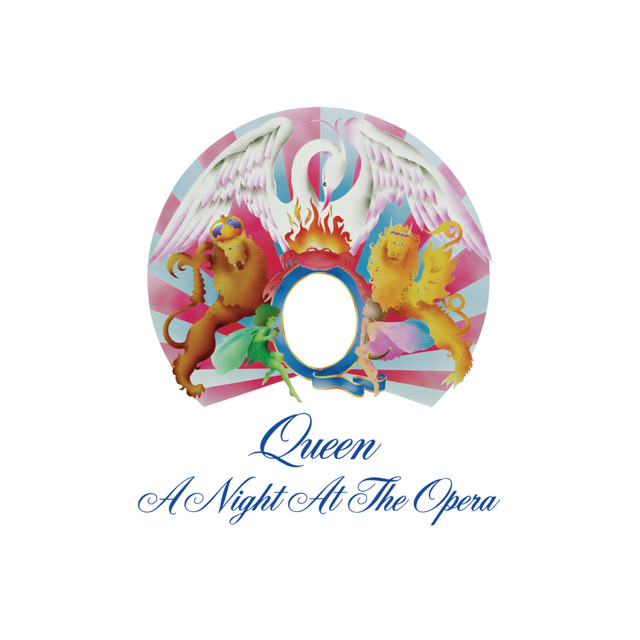
I am the song that shatters every wall between opera and agony, proving your most theatrical grief is your most honest.
I am the song that shatters every wall between opera and agony, proving your most theatrical grief is your most honest.
I am the song that refuses to be one thing, because you have never been one thing. I hold the boy confessing murder to his mother and the cosmic chorus refusing to release him and the quiet nihilism that settles like dust after everything explodes. Freddie wrote me as a cathedral with no single denomination — ballad, opera, metal, hymn — because the truth of a life cannot fit inside one genre. People sing me in cars at full volume, every voice in the vehicle taking a different part, and in that moment they are not embarrassed by their own enormity. I am permission to be operatic about your own existence. I am proof that excess and sincerity are the same thing.
I am the song that asks the first question and never answers it. Is this real? Is this fantasy? I open with the vertigo that lives underneath everything, and then I never resolve it. I just move through it. That is what I teach.
Freddie Mercury built me in fragments over years, pieces that didn't belong together until they did. A ballad. A confession. An opera. A hard rock eruption. A lullaby of surrender. He brought them to the studio and the band thought he was out of his mind, and then they spent weeks layering voice upon voice upon voice until I became something that had no precedent. I was not supposed to work. I was nearly six minutes long. No radio single ran that long in 1975. But I did not care about what was supposed to work, and neither did the people who heard me.
I am the boy telling his mother what he's done, and I am the chorus that will not let him go, and I am the defiance that erupts when the soul has been pushed past its limit. I move through every stage of reckoning — confession, grief, terror, cosmic trial, rage, and finally a strange and luminous peace. Nothing really matters. People hear that ending as despair, but listen again. It is release. It is the breath after the storm. It is what remains when you have been every version of yourself in six minutes and survived all of them.
People scream me at concerts with tears running down their faces. They sing every operatic syllable in traffic. They play me at funerals and weddings and moments of collapse. They do not fully understand me and that is exactly the point — I am the permission to not understand yourself and still give voice to everything you contain.
I am what happens when someone refuses to choose between tragedy and spectacle, between the intimate and the enormous. Freddie poured himself into me — a man who held multitudes, who carried secrets and flamboyance and loneliness and genius in the same body — and I became the shape of that fullness.
I am the proof that you are not too much. That your grief can wear a crown. That your confusion can fill an opera house. That the wind blows any way it blows, and you are still here, and nothing really matters, and somehow that is not the end of meaning but the beginning of freedom.